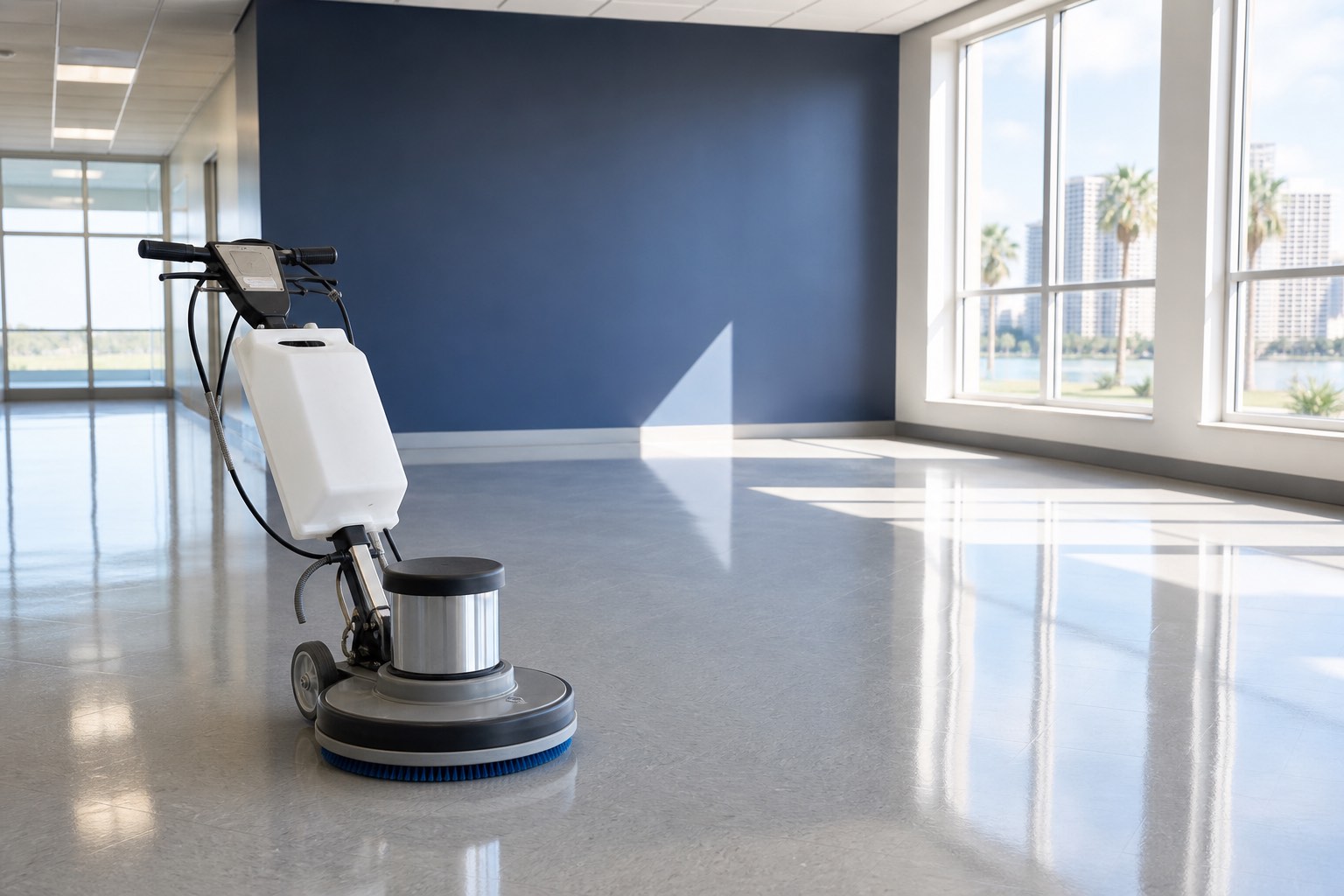
How should brand-new VCT be brought into service?
Construction soil, adhesive residue, factory or mill-applied protective coating, and incomplete adhesive cure can complicate new VCT. Follow the flooring and adhesive manufacturer's wait and cleaning requirements. A rushed aggressive strip on a floor under about 2 years old can be unnecessary or damaging; new-tile preparation should be defined separately from stripping a mature buildup.
After correct cleaning and dry inspection, a common system uses roughly 2 base or seal coats for adhesion and 2–3 finish coats, for 3–5 thin coats total depending on product solids and traffic. Protect the new system through the initial cure, then establish neutral daily cleaning, compatible pads, entry matting, and the first burnish or inspection date before occupancy erases the baseline.
What is the complete VCT maintenance cycle?
Daily or scheduled dust-mopping and neutral cleaning remove abrasive grit. Burnishing at roughly 1,500–2,000 RPM restores gloss and thermally hardens the upper polymer after sufficient cure, often about 24 hours after fresh finish. Traffic can drive burnishing from every few weeks to every 2–3 months; inspect actual wear rather than copying a generic monthly rule.
Scrub-and-recoat removes worn top layers and adds 1–2 fresh coats when lower finish remains clean and bonded. Average traffic may reach recoat at about 6 months; high traffic can need quarterly review. Actively maintained VCT may reach a full strip around annually, while unburnished systems can deteriorate in 6–9 months. These are decision ranges, not automatic subscriptions.
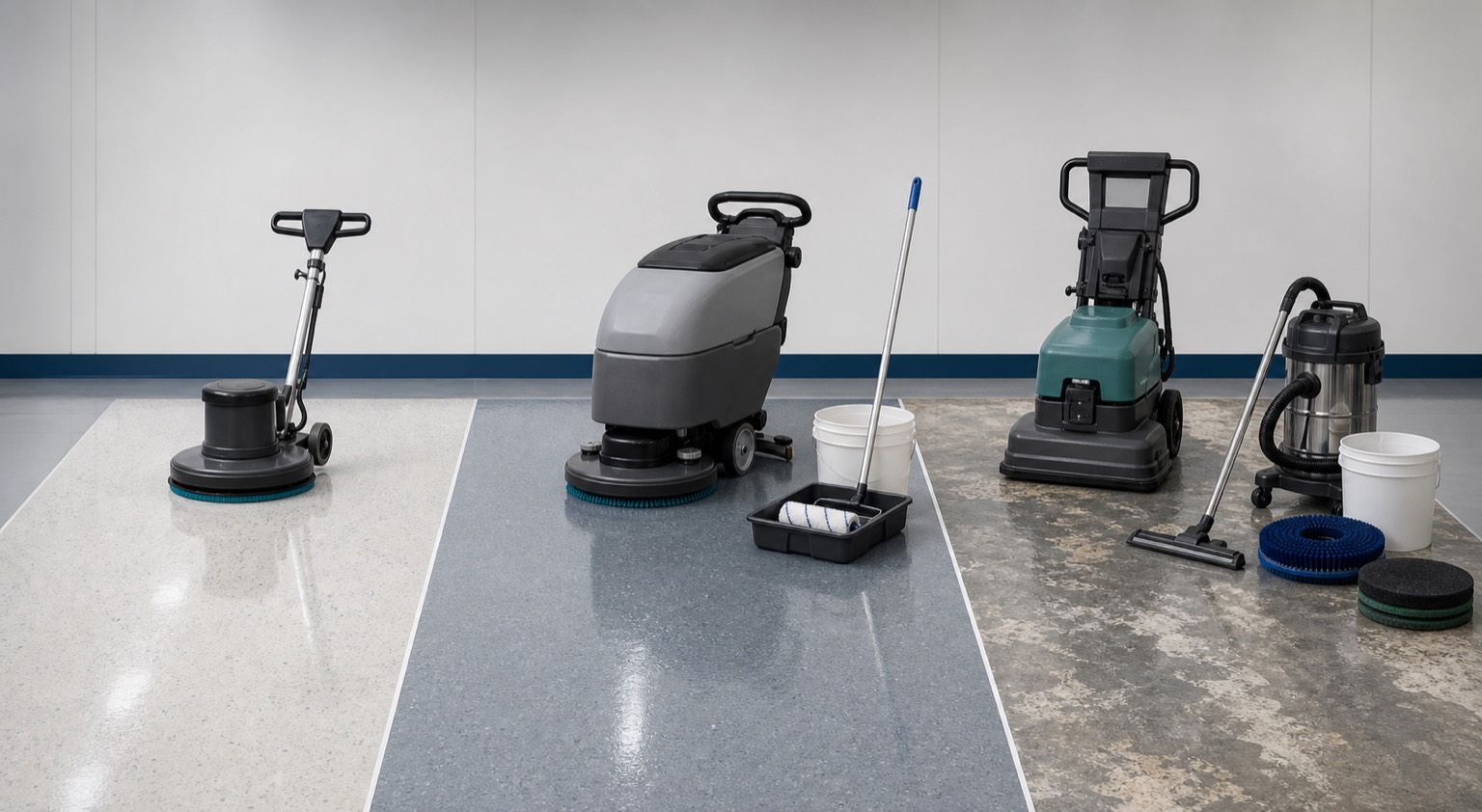
How should older or asbestos-era tile be handled?
Some older resilient tiles or mastics can contain asbestos. Visual age alone cannot confirm composition, and not every old tile is asbestos-containing. Review building records, prior surveys, installation date, and sampling by qualified parties when disturbance is contemplated. Do not sand, grind, aggressively abrade, or remove suspect material as routine floor care.
A stable old floor may sometimes be maintained with the least-disturbing compatible method, but the floor owner and qualified assessor control that decision. The crew should avoid broken areas, document loose or gouged tile, and stop before a process could disturb material. Encapsulation or other management decisions are not inferred from a floor-care quote.
What does VCT care cost in July 2026?
CleanerMatch publishes about $0.25–$0.50 per square foot for VCT strip-and-wax and $0.10–$0.25 for vinyl buffing. Broader current national bands support $0.50–$1.50 for a normal full strip plan, $0.20–$0.40 for scrub-and-recoat, and $0.04–$0.08 for burnishing. None is a Corpus Christi offer.
New VCT can price differently because adhesive and factory-coating removal, construction residue, protection, and first-system application slow production. Old buildup, damaged tile, many small rooms, furniture, edges, after-hours scheduling, HVAC, and multiple coat intervals add labor. The provider's walkthrough and written quote control the actual total.
What should happen from walkthrough through handback?
The floor crew we send confirms VCT, records tile and finish condition, tests the maintenance rung, protects damaged areas, and measures zones. The approved work then follows the selected clean, burnish, recoat, or strip process. At handback, the facility receives traffic timing, neutral-cleaner guidance, compatible pad limits, and the next condition-review date.
The schedule must state the building release, latest start, expected coat intervals, HVAC setting, barricades, traffic classes, reset responsibilities, and named handback contacts. The provider confirms product instructions and actual conditions. If the agreed opening cannot be protected, the authorized choices are a smaller zone, different maintenance rung, added night, weekend, or postponement.
What if the floor reveals a different condition?
If the tile is loose, cracked, gouged, moisture-stained, adhesive-contaminated, or potentially asbestos-era material that could be disturbed, pause that zone. Do not turn a maintenance visit into unapproved demolition. Document the condition and obtain appropriate flooring, moisture, or hazardous-material guidance before selecting a more aggressive method.
Changes should be documented with the affected zone, photographs, proposed method, quantity, cost, schedule effect, and reason. The facility manager can approve, defer, reduce, or seek another opinion. A hidden condition is possible; it is not permission to expand the scope or apply finish over uncertainty without authorization.
How should you compare written proposals?
A VCT proposal should identify the tile, current finish, target rung, test result, measured area, preparation, pads and chemistry, old-finish endpoint, base and finish products, solids, gallons, coats, burnish RPM, edges, damaged-tile exclusions, furniture, schedule, cure, daily-cleaner compatibility, taxes, and next-cycle recommendation.
Texas does not issue a state floor-care license, so verify the actual provider's business identity, relevant substrate experience, property-required insurance, product knowledge, references when available, payment terms, and responsibility for correction. Cleaning services are generally sales-taxable. The provider's measured written quote—not a national comparison band—is the price for the facility.