A floor plan for a fast-growing coastal city

Commercial Floor Waxing in Portland, TX

Portland's population has grown about 37% since 2000, while San Patricio County petrochemical investment has reinforced its commuter and commercial role. Floor programs should respond to real traffic growth, not a generic coastal schedule.

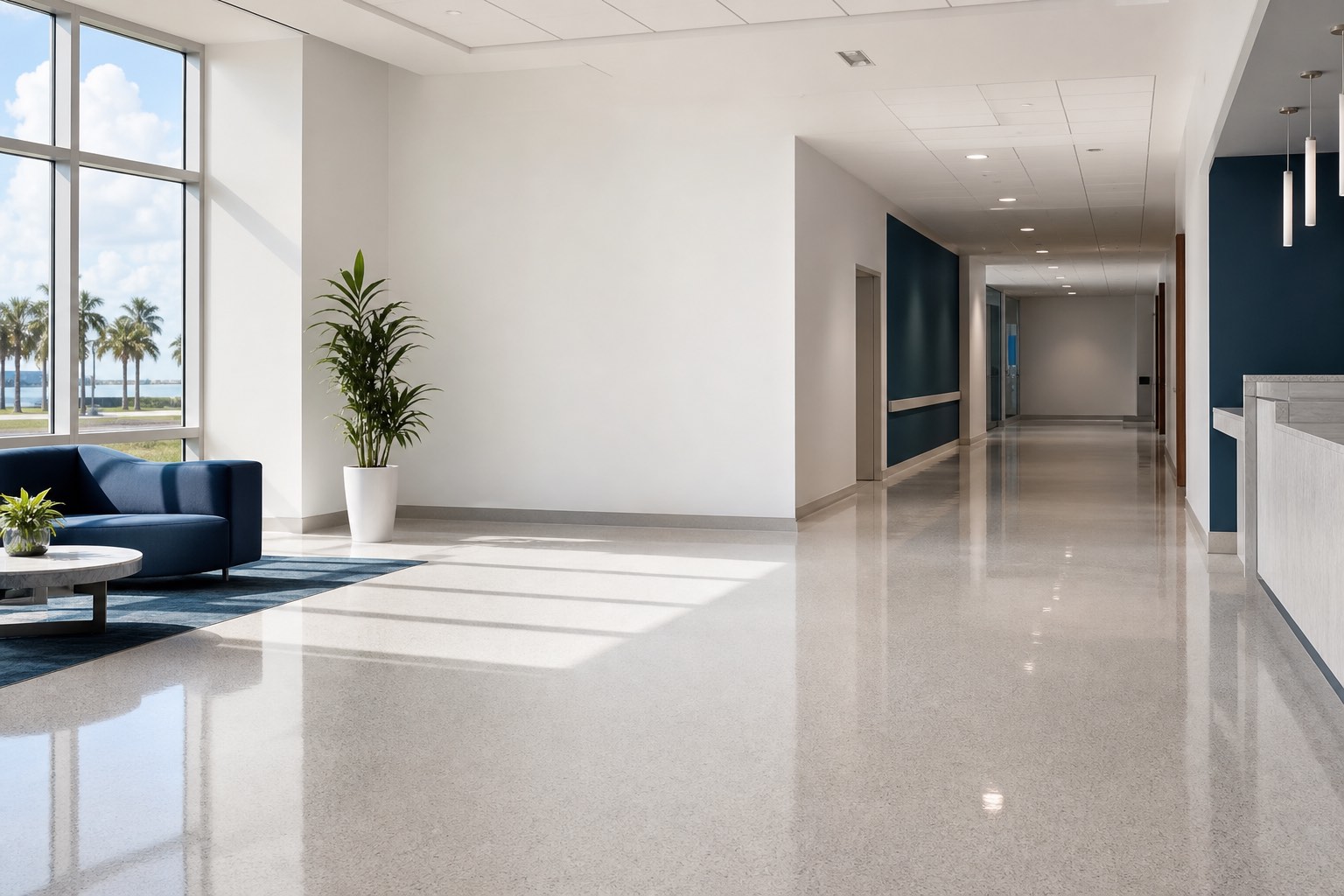
Modern commercial corridor with coastal daylight and resilient flooring
$0.50–$1.50 strip and waxNormal-condition national planning band as of July 2026; the provider's measured written quote controls.
$0.20–$0.40 scrub and recoatUse when the upper finish is worn but the clean lower system remains bonded.
Open-by-morning planScheduled backward from handback, cure, coats, humidity, HVAC, reset, and an agreed fallback.

Local operating context, property-specific scope

How does Portland's growth change floor-care planning?

Portland has roughly 20,900 residents and has grown about 37% since 2000. It developed historically as a bedroom community and has been buoyed by San Patricio County petrochemical investment. Those sourced facts support a practical facility question: have entry counts, tenant use, staffing, delivery traffic, or public hours outgrown the floor calendar written several years ago?

Do not translate regional growth into a claim about one building. Measure the actual change by zone. Compare entry wear, cart and chair paths, cleaner frequency, burnish interval, and recoat history before and after occupancy changes. A lobby with doubled traffic may need quarterly review while a back office remains on condition-based maintenance.

Tell us the floor, area, and opening time

Request a Written Quote

Submitting this form allows Corpus Christi Floor Waxing to send your details to an independent local service provider, who can contact you about scheduling and a written quote.

Which Portland zones should be inspected first?

Start with commuter-facing entrances, reception and service counters, break areas, main corridors, and any transition from outdoor grit to VCT. Photograph the first 20–30 feet at each entry and compare it with interior control areas. Improve matting and grit removal before buying a harder finish as the only answer.

Facilities serving shift changes or industrial-support offices can experience short concentrated traffic peaks, but that use must be confirmed for the address. Record peak windows, footwear, carts, deliveries, and furniture. The floor crew we send can then price burnishing, targeted recoating, or a full strip by observed finish condition rather than by Portland's economy alone.

How should a Portland overnight window be built?

Work backward from the first employee, customer, or delivery. Include closing delay, cleared rooms, stripping or scrubbing, recovery, rinsing, 3–5 coats when applicable, 30–60 minute nominal intervals, humidity allowance, reset, inspection, and handback. Keep HVAC running at the agreed setting; coastal humidity can turn a nominal half-hour coat interval into several hours.

A business with one public entrance may need phased rooms or a weekend. Preserve exits and accessible routes, state who manages alarms and keys, and set a latest-start decision. An open-by-morning plan is conditional on scope and conditions; if the measured work cannot fit, reduce the zone before finish is opened.

What price bands apply in Portland as of July 2026?

No verified Portland floor-care menu was found. National comparison bands are $0.04–$0.08 per square foot for burnishing, $0.20–$0.40 for scrub-and-recoat, and $0.50–$1.50 for a normal-condition strip-and-wax plan, with broader published strip figures from $0.25 to $3.00.

Portland's actual quote depends on measured area, minimums, room layout, furniture, finish depth, edges, product, coats, after-hours access, HVAC, travel, and taxes. Ask bidders to use the same zone map and reopening time. A large open facility and a small chopped-up office should not be expected to share a unit rate.

What local assumption should stay out of the proposal?

Do not assume every Portland building supports petrochemical operations, carries heavy grit, or runs shifts. The regional investment context helps ask better questions; it does not establish the tenant, floor, traffic, contamination, or budget. The property walkthrough supplies those facts.

Also do not infer that coastal proximity alone proves a shorter strip cycle. Sand and grit are reasonable abrasion risks, but no Portland wear-rate study was verified. Use entry inspections, mat soil, finish loss, and actual recoat dates. Local substance means measurable building decisions, not swapping the city name into the same cadence.

Questions people actually ask

What else should you know before scheduling?

Does Portland's growth mean floors need waxing more often?

Not automatically. Portland's roughly 37% population growth since 2000 is a reason to compare current entry counts, operating hours, and wear with the old calendar. Inspect traffic zones and service history. Increase grit removal, burnishing, or recoating only where finish condition supports it; quiet rooms should not inherit the lobby's frequency.

Can a Portland office be completed between shifts?

Sometimes, if the released zone, maintenance rung, coat count, HVAC, humidity, furniture, and handback fit the closure. A burnish can fit a shorter window than a scrub-and-recoat; a 3–5 coat strip needs more. Set a latest-start decision and a smaller-zone fallback instead of treating the next shift as an unconditional promise.

What is a fair Portland floor-waxing price?

No verified local menu was found. July 2026 national comparisons are about $0.04–$0.08 per square foot for burnishing, $0.20–$0.40 for recoat, and $0.50–$1.50 for normal strip-and-wax planning. The written quote follows measured condition, room layout, furniture, edges, coats, access, HVAC, travel, and applicable sales tax.

Measured scope before the floor closes

Ready to turn the appearance standard into a floor plan?

Call Corpus Christi Floor Waxing or send the form. We will schedule the next conversation, and the service provider will confirm the floor type, measured scope, reopening plan, and written price before you approve work.

(361) 310-1620