When does burnishing work, and when does it fail?
Burnishing fits intact, clean, adequately thick finish with light scuffs, traffic dulling, and no embedded dirt. It can deepen gloss and reduce the need to add material. It fails as a correction when finish is worn through, contaminated, peeling, powdering, heavily scratched, or carrying dirt between layers. A small test lane should reveal the branch before the full area is priced.
Pad aggressiveness, machine speed, finish compatibility, clean surface, passes, and dust control matter. An aggressive pad can damage a thin system or expose tile. Burnishing fresh finish too early can mark or move it; about 24 hours of cure is a common planning reference. The manufacturer and actual conditions determine the final timing.
What is the maintenance ladder and its July 2026 price?
Use burnishing at about $0.04–$0.08 per square foot when finish is sound. Use scrub-and-recoat at roughly $0.20–$0.40 when the upper system is worn but lower layers are clean and bonded. Use a full strip at roughly $0.50–$1.50 for normal planning, with published extremes to $3.00, when contamination or failure reaches the lower system.
Those are sourced national comparison bands as of July 2026, not local offers. A 20,000-square-foot open hall at $0.06 is a $1,200 burnish comparison; at $0.25 it is a $5,000 recoat; at $0.75 it is a $15,000 strip. The large step is why a condition test and maintenance calendar deserve attention before appearance becomes an emergency.
| Maintenance rung | Comparison rate | Example total | Use when |
|---|---|---|---|
| Burnish | $0.04–$0.08/sq ft | $800–$1,600 | Finish clean, bonded, and thick enough |
| Scrub and recoat | $0.20–$0.40/sq ft | $4,000–$8,000 | Top layers worn; no embedded dirt |
| Full strip and wax | $0.50–$1.50/sq ft normal plan | $10,000–$30,000 | Buildup, contamination, incompatibility, failure |
How often should a floor be burnished?
Maintained traffic lanes may justify every few weeks; lower-traffic areas may need every 2–3 months. Divide by actual traffic instead of treating the entire building alike. Entries, checkout lanes, elevator lobbies, nurse stations, cafeteria queues, and main corridors can show wear long before offices and storage rooms.
Record gloss or appearance at consistent control points, scuff rate, cleaner, pad, machine hours, and passes. If the interval keeps shrinking, the finish may be too thin, the daily cleaner may be leaving residue, entry grit may be excessive, or the floor may need recoating. More frequent burnishing should trigger diagnosis, not become invisible labor.
Can the janitorial routine undo burnishing?
Yes. High-alkaline cleaner, excessive detergent, dirty mop water, incompatible disinfectant residue, aggressive pads, or skipped dust control can haze finish and load it with grit. A neutral cleaner at the correct dilution, clean equipment, compatible pads, and effective entry matting protect the result. Product selection and dilution should be written where staff can use them.
White spots or streaks can come from chemical residue, hard-water minerals, incomplete rinsing, or finish damage. Do not answer every haze complaint with a faster machine. Test cleaning first, verify chemistry and pad, then decide whether the surface needs burnish, top scrub, recoat, or strip.
What should happen from walkthrough through handback?
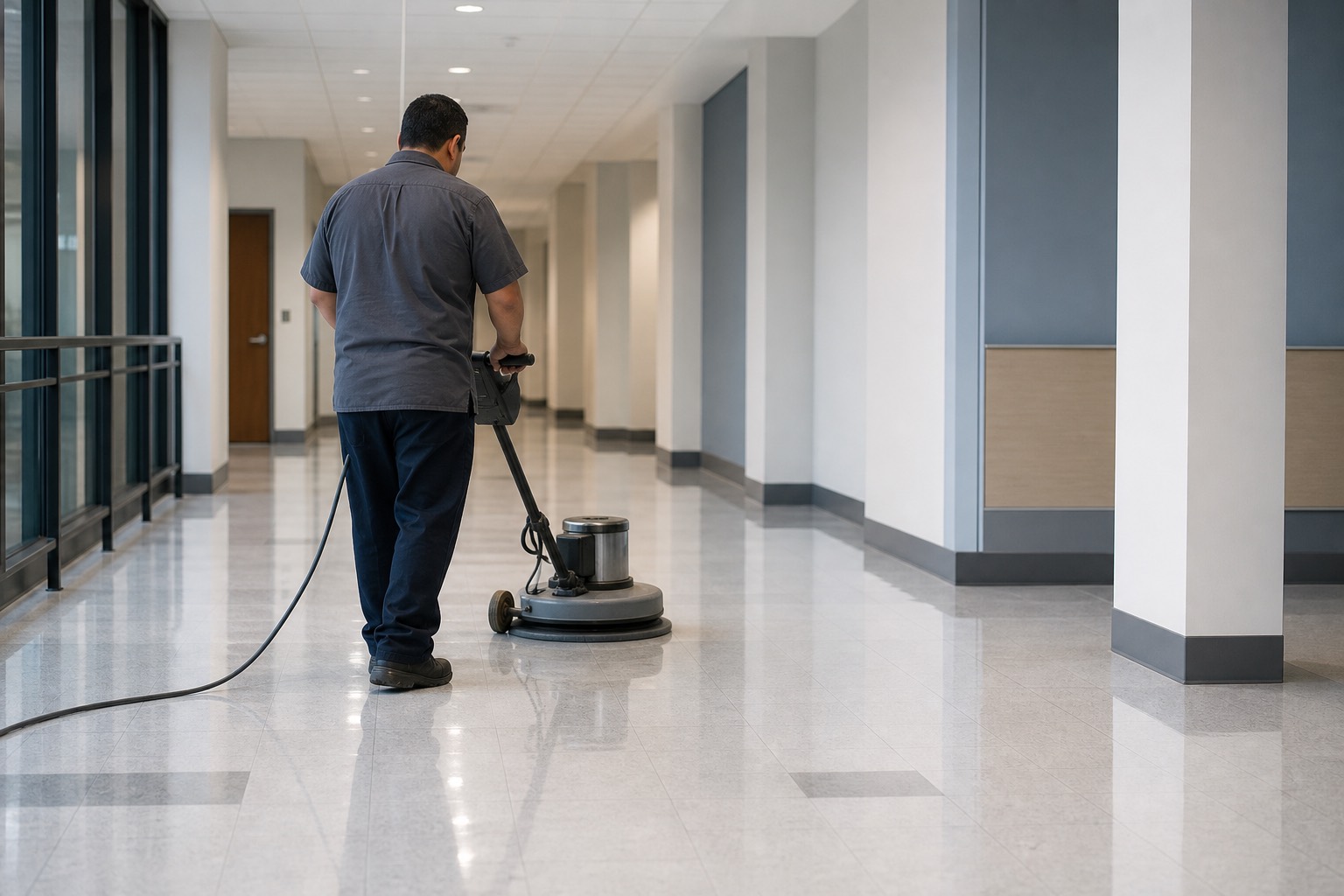
The floor crew we send inspects finish thickness and bond, cleans a defined test area, selects a compatible pad, burnishes a test lane, and compares the result under normal lighting. The approved work proceeds by traffic zone with dust control, edge protection, cord or battery safety, barricades, and a handback note describing any areas that did not recover.
The schedule must state the building release, latest start, expected coat intervals, HVAC setting, barricades, traffic classes, reset responsibilities, and named handback contacts. The provider confirms product instructions and actual conditions. If the agreed opening cannot be protected, the authorized choices are a smaller zone, different maintenance rung, added night, weekend, or postponement.
What if the floor reveals a different condition?
If the test lane stays hazy, exposes tile, powders, peels, or shows embedded dirt, stop repeating passes. The provider should propose cleaner correction, scrub-and-recoat, or stripping by zone. A maintenance machine cannot repair incompatible chemistry or contamination beneath the finish, and added passes can make a thin system worse.
Changes should be documented with the affected zone, photographs, proposed method, quantity, cost, schedule effect, and reason. The facility manager can approve, defer, reduce, or seek another opinion. A hidden condition is possible; it is not permission to expand the scope or apply finish over uncertainty without authorization.
How should you compare written proposals?
Compare measured area, floor and finish identification, cleaning, test lane, machine RPM, pad type, dust control, number of passes, edges, obstacles, battery or cord plan, operating hours, furniture, traffic release, exclusions, taxes, and the branch price if burnishing fails. A per-visit total without those items hides production assumptions.
Texas does not issue a state floor-care license, so verify the actual provider's business identity, relevant substrate experience, property-required insurance, product knowledge, references when available, payment terms, and responsibility for correction. Cleaning services are generally sales-taxable. The provider's measured written quote—not a national comparison band—is the price for the facility.