What must happen before the retail floor crew starts?
The store names one closing contact and one opening contact, clears merchandise and movable fixtures by the agreed time, isolates food or sensitive inventory, confirms alarm and key procedure, protects refrigeration and electrical cords, and identifies fixed items that remain. The provider confirms water, power, HVAC, loading access, waste recovery, and every zone that must stay passable.
Photograph fixtures, baseboards, thresholds, display edges, and pre-existing damage. State who moves gondolas, carts, racks, checkout mats, and promotional displays. Heavy or fixed fixtures may be excluded, cleaned around, or scheduled for a separate reset. Hidden assumptions about furniture are a common reason a fast open-floor quote fails in the actual store.
How does the crew protect a morning opening?
The plan sets a latest-start time, latest-first-coat time, latest-final-coat time, and escalation trigger. Barricades and signage stay until the provider's contact confirms traffic release. The opening manager receives completed zones, restricted zones, furniture instructions, and a number for exceptions. Nobody should remove a barrier because the surface looks dry under retail lighting.
Corpus humidity makes HVAC continuity important. A nominal 30–60 minute coat interval can stretch to hours when moisture cannot leave the film. Keep air conditioning operating at the agreed setting, avoid fans blowing directly across wet finish, and choose a phased scope that leaves contingency. A conditional open-by-morning plan is credible only when it includes a fallback.
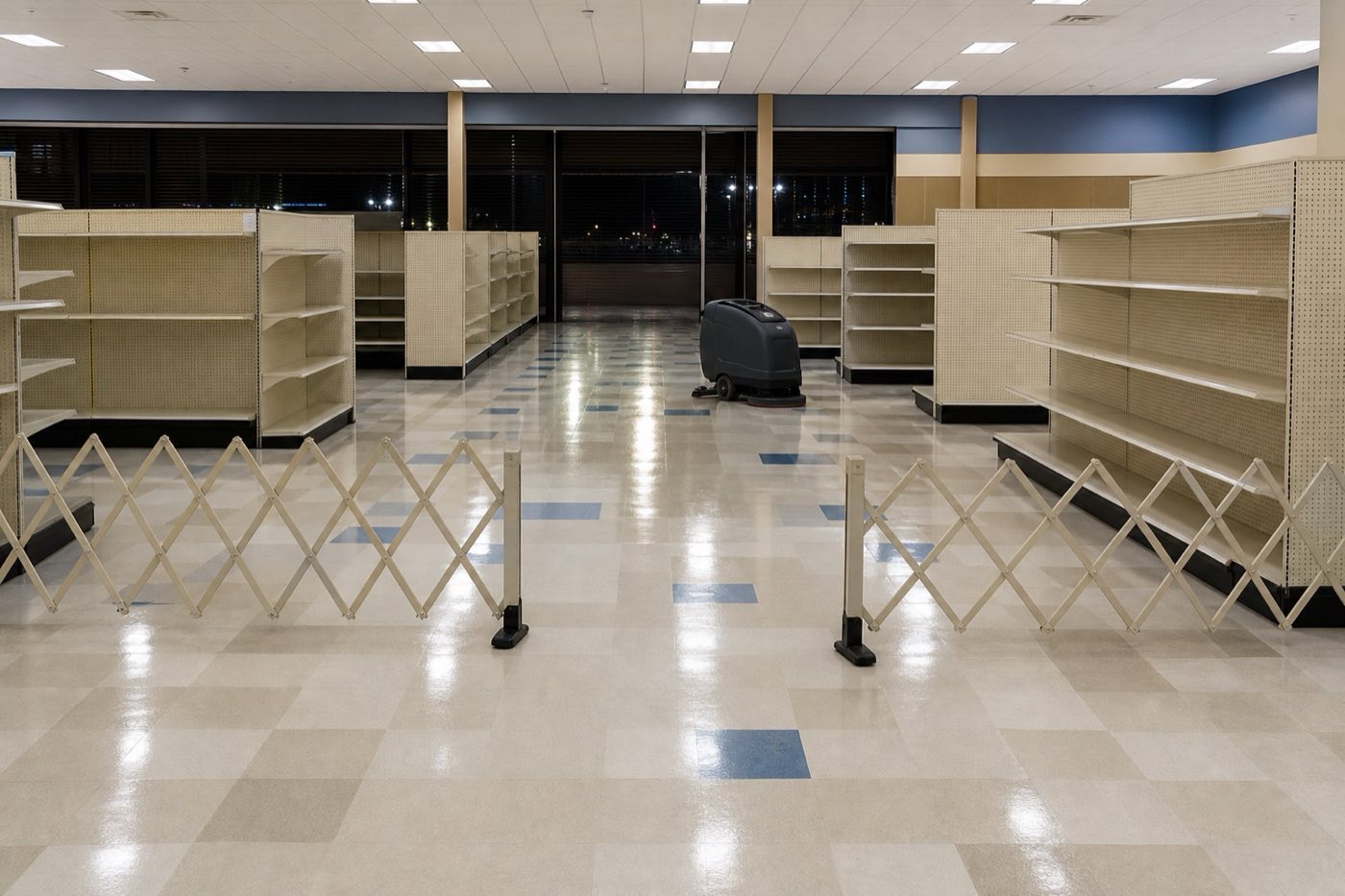
Which retail zones need different maintenance rungs?
Entrances, checkout lanes, service counters, cart paths, and main aisles carry concentrated soil and pivoting traffic. Stockrooms and low-traffic corners may remain serviceable much longer. Burnish or recoat high-wear zones when transitions can be blended and floor appearance allows; do not strip the entire store merely because one entry has failed.
Conversely, repeated spot coating can create visible buildup boundaries and inconsistent chemistry. Keep a zone map and coat history. When dirt or yellowing spans lower layers, schedule a controlled full strip by phase. A traffic-tiered plan should reduce emergency whole-store shutdowns without creating a patchwork of incompatible finish.
What does retail floor care cost in July 2026?
Use national comparisons of $0.04–$0.08 per square foot for burnishing, $0.20–$0.40 for scrub-and-recoat, and $0.50–$1.50 for normal strip-and-wax planning. Minimums, night access, security, fixture moves, hand edges, multiple phases, humidity contingency, coat system, and morning handback can move a retail quote outside those bands.
Request a base for open square footage plus transparent units for fixtures, edge-heavy zones, extra mobilizations, furniture resets, and unexpected buildup. The written quote should show sales tax and the exact number of nights. A lower per-foot rate spread across 4 unpriced return visits is not comparable with a complete 2-night plan.
What should happen from walkthrough through handback?
The floor crew we send signs in with the named closing contact, confirms the cleared zone, photographs exceptions, installs barricades, performs the approved maintenance rung, tracks coat times and conditions, resets only the agreed items, and hands the zone to the named opening contact. The handback record includes restrictions and any deferred edge or fixture area.
The schedule must state the building release, latest start, expected coat intervals, HVAC setting, barricades, traffic classes, reset responsibilities, and named handback contacts. The provider confirms product instructions and actual conditions. If the agreed opening cannot be protected, the authorized choices are a smaller zone, different maintenance rung, added night, weekend, or postponement.
What if the floor reveals a different condition?
If closing runs late, fixtures remain, HVAC is unavailable, humidity extends dry time, or the stripped floor reveals a condition that threatens opening, stop and use the written fallback. Options include reducing the zone, postponing coats, extending into a weekend, or keeping a marked area closed. Rushing the last layer transfers schedule risk into appearance and slip risk.
Changes should be documented with the affected zone, photographs, proposed method, quantity, cost, schedule effect, and reason. The facility manager can approve, defer, reduce, or seek another opinion. A hidden condition is possible; it is not permission to expand the scope or apply finish over uncertainty without authorization.
How should you compare written proposals?
Normalize retail bids by zone map, square feet, open and obstructed area, furniture and fixtures, security, access, floor type, maintenance rung, chemistry, coats, HVAC, mobilizations, barricades, signage, cure, reset, opening handback, taxes, and fallback. Ask who pays when owner-controlled access is late and how weather or humidity moves the plan.
Texas does not issue a state floor-care license, so verify the actual provider's business identity, relevant substrate experience, property-required insurance, product knowledge, references when available, payment terms, and responsibility for correction. Cleaning services are generally sales-taxable. The provider's measured written quote—not a national comparison band—is the price for the facility.