What are the real steps in a commercial strip-and-wax job?
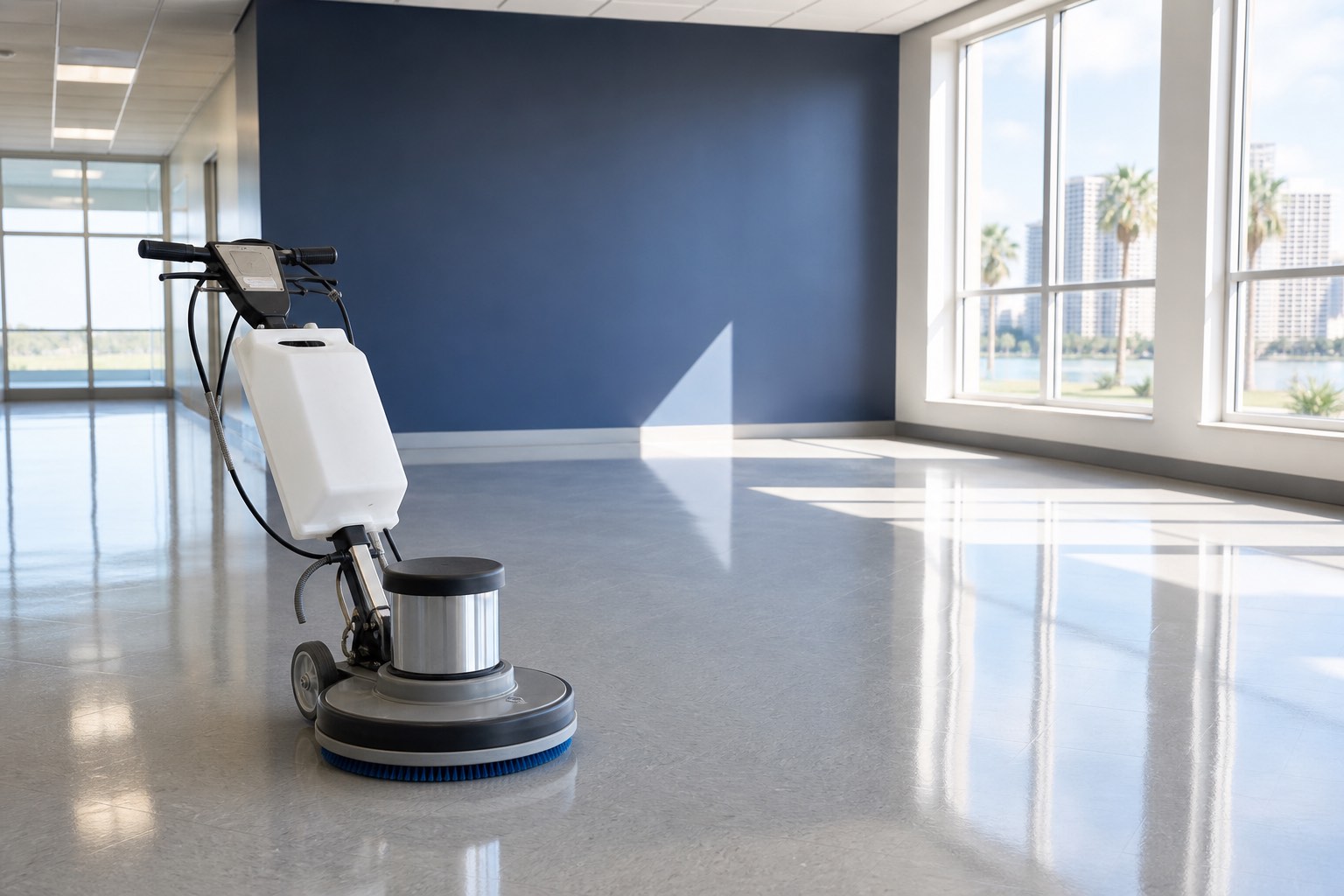
The floor is identified and cleared, loose grit is removed, sensitive edges and adjoining surfaces are protected, stripper is diluted for the finish system, and the solution is given controlled dwell time without drying. Mechanical agitation releases old finish. The slurry is recovered while wet, not pushed into corners, grout, door tracks, or baseboard seams.
The floor crew then details edges and low spots, rinses until chemical residue is removed and pH is controlled, inspects for remaining finish, and lets the substrate dry completely. Only a clean neutral surface receives finish. Base or sealer coats may establish adhesion before finish coats. Each layer is thin, complete, and allowed to dry before the next begins.
Why are 3–5 thin coats usually better than 10 coats?
Commercial VCT guidance from Okumu Supply and Imperial Dade supports a common 3–5 thin-coat system, often including about 2 base or seal coats and 2–3 finish coats. Between-coat drying is commonly 30–60 minutes under workable conditions. Solids, manufacturer coverage, traffic, and desired gloss still control the exact system.
Extra wet film does not create proportionate shine. Thick or rushed layers can trap moisture, level poorly, mark under traffic, powder, or fail to bond. Strong fans aimed across a wet coat can skin the surface and produce powdering. The coat count belongs with product solids, gallons, measured area, application rate, dry interval, and final-cure plan—not as an isolated sales feature.
What do edges, rinsing, and pH reveal about workmanship?
Edges reveal whether the process was controlled. Black lines along baseboards can be old finish softened and pushed outward, slurry left to dry, or new finish applied over contamination. Ask whether edge stripping is included, how fixed cabinets and immovable fixtures are handled, how baseboards are protected, and where the agreed stop line sits under doors and furniture.
Stripper residue is an adhesion failure waiting to happen. The floor may look clean yet remain alkaline or carry surfactant film. The crew should recover dirty solution, use clean rinse water, inspect and test as the product system requires, and never rely on fragrance or appearance as proof of neutralization. Finish over residue can peel within weeks even when the finish product itself is sound.
What does stripping and waxing cost in July 2026?
Published comparisons include $0.25–$0.70 per square foot from Smart Janitorial, $0.50–$3.00 from HomeGuide, $0.75–$1.50 in a Detroit contractor FAQ, and $1.72–$2.15 in a small-job-skewed Homewyse calculation. These are national or out-of-market anchors, not Corpus Christi offers.
Area, minimums, finish depth, condition, chopped-up rooms, furniture, edge footage, coat count, product solids, after-hours access, multiple mobilizations, HVAC, water, security, and taxes move the total. Labor commonly accounts for 70%–80% of cost. Require measured square feet and a written process so a low-cost scrub is not compared with a full chemical strip.
What should happen from walkthrough through handback?
Before arrival, the facility clears the agreed movable items and confirms water, power, HVAC, alarms, keys, loading access, and closure zones. The floor crew we send photographs condition, tests the agreed method, strips and recovers slurry, details edges, rinses and dries, applies the specified coat system, maintains barricades, and documents the final-coat and handback times.
The schedule must state the building release, latest start, expected coat intervals, HVAC setting, barricades, traffic classes, reset responsibilities, and named handback contacts. The provider confirms product instructions and actual conditions. If the agreed opening cannot be protected, the authorized choices are a smaller zone, different maintenance rung, added night, weekend, or postponement.
What if the floor reveals a different condition?
If stripping exposes cracked tile, loose adhesive, moisture, staining from below, gouges, or suspect old material, the floor should not be hidden automatically under more finish. The crew documents the exception, protects the area, and the provider proposes a repair, limited maintenance method, or qualified assessment. Added work requires written authorization before the original scope changes.
Changes should be documented with the affected zone, photographs, proposed method, quantity, cost, schedule effect, and reason. The facility manager can approve, defer, reduce, or seek another opinion. A hidden condition is possible; it is not permission to expand the scope or apply finish over uncertainty without authorization.
How should you compare written proposals?
Normalize bids by measured area, floor type, finish-removal endpoint, stripper and dilution, dwell and recovery, edge method, rinse and pH control, drying, base and finish products, solids, gallons, coats, intervals, furniture, immovables, access, HVAC, barricades, traffic release, taxes, cleanup, and correction terms.
Texas does not issue a state floor-care license, so verify the actual provider's business identity, relevant substrate experience, property-required insurance, product knowledge, references when available, payment terms, and responsibility for correction. Cleaning services are generally sales-taxable. The provider's measured written quote—not a national comparison band—is the price for the facility.