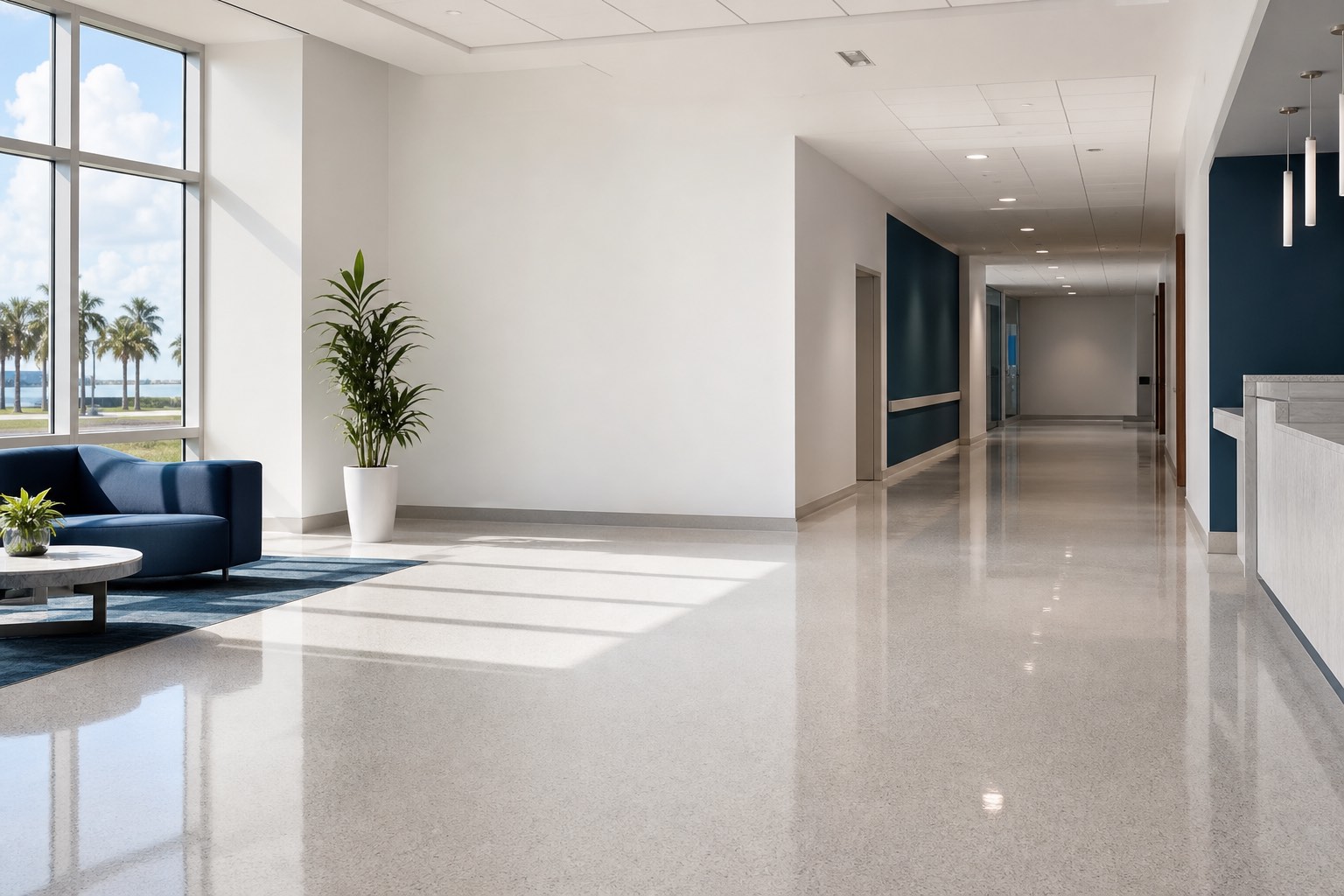
Why can floor-care quotes vary by 5 times for the same building?
Because the bids often describe different work. One may price open square footage and a light scrub; another may include full chemical stripping, edge work, neutralizing rinses, 3–5 thin finish coats, furniture handling, night access, and a return visit. A $0.30 rate and a $1.50 rate cannot be compared until the measured area and process are on the same page.
As of July 2026, published national references span roughly $0.25–$0.70 per square foot for standard strip-and-wax work, $0.50–$3.00 across broader condition bands, and $1.72–$2.15 in a small-job-skewed Homewyse calculation. We use $0.50–$1.50 as a planning band for a normal commercial walkthrough, never as a local offer.
Which 3 numbers should a facility manager have before requesting bids?
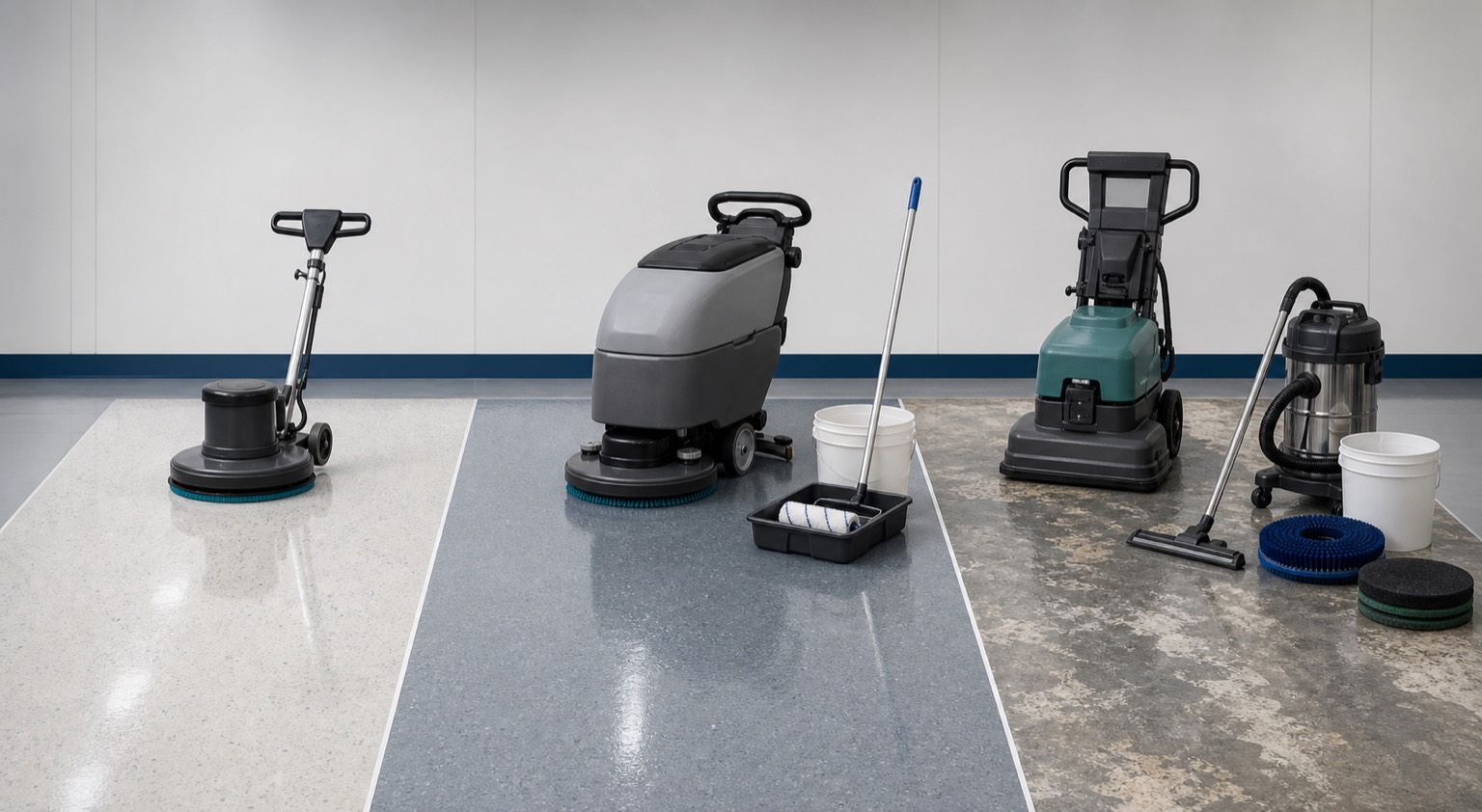
First, usable floor area by zone—not total building area. Second, the last full strip, recoat, and burnish dates. Third, the hard reopening time, including furniture reset and first public traffic. Add the floor type and photos of entries, edges, and the worst traffic lane. Those facts expose whether a bidder is pricing burnishing, a scrub-and-recoat, or a true strip-out.
For early budgeting, use $0.50–$1.50 per square foot for stripping and waxing, $0.20–$0.40 for scrub-and-recoat, and $0.04–$0.08 for burnishing. The floor crew we send measures and inspects before a written quote. Labor commonly represents 70%–80% of cost, so open halls price differently from offices broken into 40 rooms even at identical square footage.
Can the floor be open by morning?
Often, but only when the scope, product, humidity, HVAC, coat count, and closure window support it. Our scheduling standard is to work backward from the agreed opening time. The written plan states when the last coat must go down, when light foot traffic can resume, when furniture returns, and who confirms handback. If the math does not fit one night, we propose zones or a weekend before work is authorized.
Between-coat drying is commonly 30–60 minutes under workable conditions, while Gulf humidity can stretch drying dramatically. Corpus Christi averages high relative humidity, and floor-finish troubleshooting guidance warns that a nominal 30-minute dry can become 3 hours or more in humid air. Running HVAC during application and cure is operational control, not a comfort upgrade.
What maintenance level keeps the budget under control?
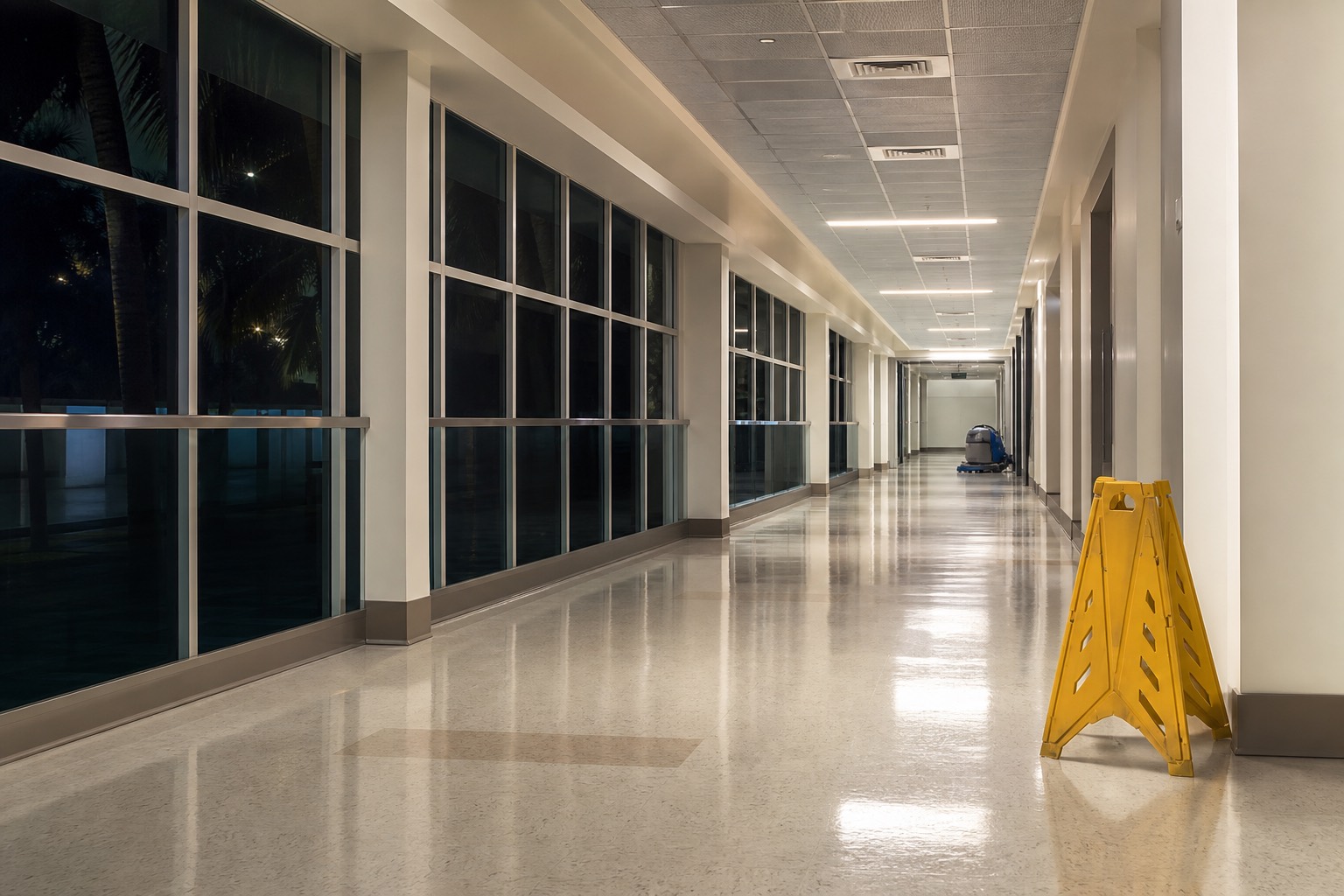
Burnish when the finish is intact but gloss and small scuffs need recovery. Scrub and recoat when the top layers are worn yet the floor still looks clean after scrubbing. Strip when dirt is locked inside the finish, edges are heavily built up, adhesion has failed, or incompatible layers cannot be corrected from the top. The phrase shiny but does not look clean is a practical strip-out warning.
Our position is to spend the least amount that restores a maintainable system. Repeatedly adding finish without removing worn top layers creates the buildup nightmare: dark edges, yellowing, uneven gloss, and a much longer future strip. A traffic-tiered calendar can keep a $0.20 recoat from turning into a $1.00 emergency strip across the whole building.
What workmanship details prevent a 3-week failure?
The floor crew we send must identify the substrate, remove old finish to the agreed endpoint, detail edges without flooding baseboards, recover slurry before it dries, rinse until residue and pH are controlled, let the floor dry, and apply 3–5 thin coats with complete drying between them. Dirty rinse water, stripper residue, forced air across wet finish, and thick rushed coats are common paths to peeling, powdering, streaks, and sealed-in debris.
The written scope should name furniture responsibilities, immovable exclusions, edge method, number of coats, finish family, HVAC setting, barricades, wet-floor signage, traffic release, and correction process. More coats are not automatically better. Five controlled thin coats can outperform 10 rushed layers because adhesion and solvent release matter more than the sales number.
Which Corpus Christi facilities fit this planning approach?
Retail stores, offices, schools, public buildings, clinics, worship facilities, dealerships, managed properties, and other commercial spaces all share the same decision structure: identify the floor, measure the zones, classify traffic, price the correct rung, and protect opening time. Healthcare work needs quiet-hour and route planning; school work often concentrates full strip-outs in summer; retail work lives or dies by morning handback.
We schedule across Corpus Christi, Portland, Robstown, Aransas Pass, Kingsville, and Alice. Salt and beach grit can reasonably be treated as abrasive entry soil, but we do not claim a local wear-rate study. The practical response is measurable: adequate walk-off matting, frequent grit removal, entry-zone inspection, and service triggered by observed wear instead of a generic coastal slogan.