Working-waterfront entry control before another coat

Commercial Floor Waxing in Aransas Pass, TX

Aransas Pass has roughly 12,400 residents and a working waterfront centered on Conn Brown Harbor and a historic shrimping fleet. Coastal entry soil and humidity belong in the floor plan, without pretending every building serves the harbor.

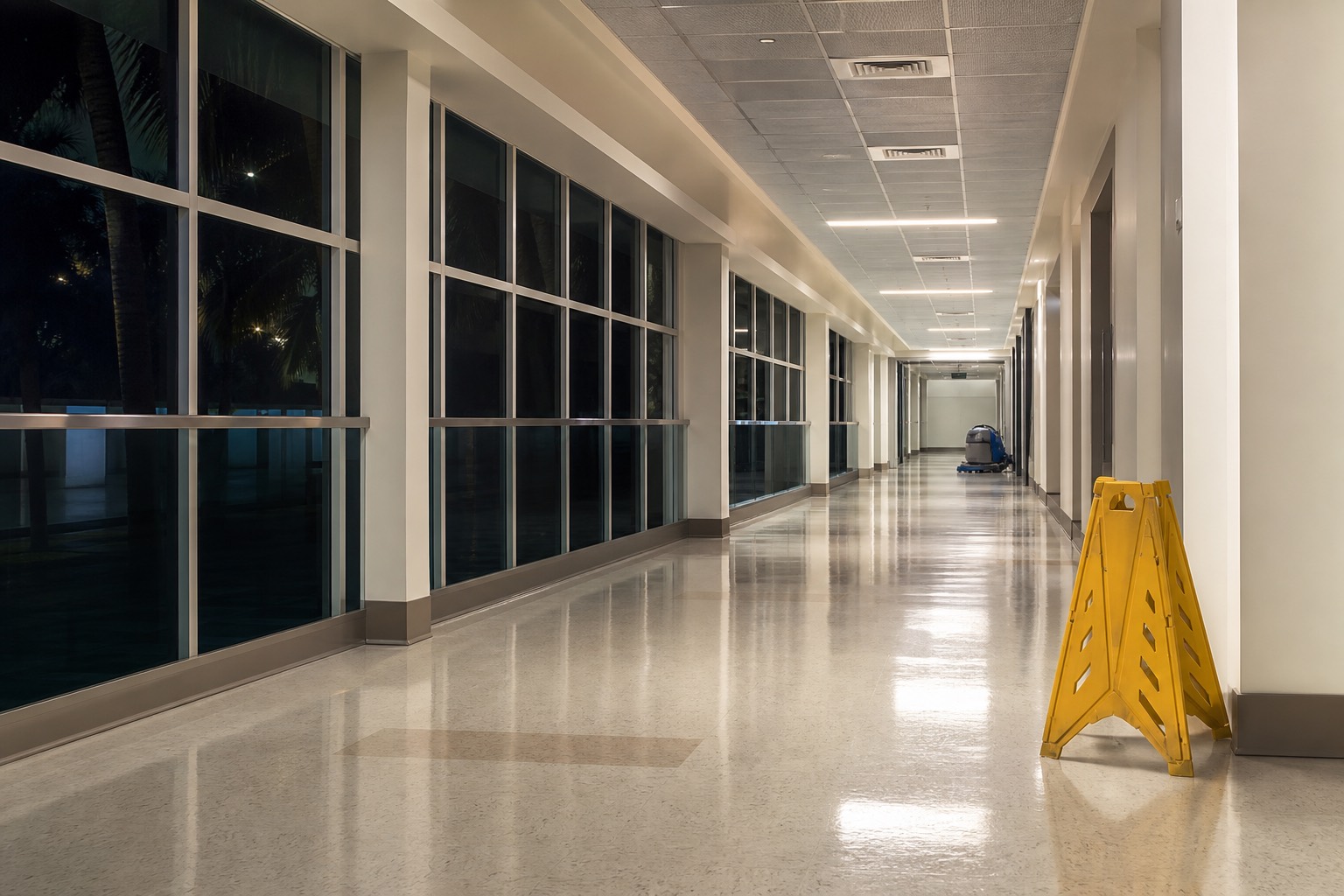
Empty commercial corridor at night with controlled floor-care access
$0.50–$1.50 strip and waxNormal-condition national planning band as of July 2026; the provider's measured written quote controls.
$0.20–$0.40 scrub and recoatUse when the upper finish is worn but the clean lower system remains bonded.
Open-by-morning planScheduled backward from handback, cure, coats, humidity, HVAC, reset, and an agreed fallback.

Local operating context, property-specific scope

How does a working waterfront affect floor-care questions?

Aransas Pass is a working-waterfront city of roughly 12,400. Conn Brown Harbor supports a shrimping fleet, and the city was once associated with one of the Gulf's largest shrimp fleets. For facilities connected to waterfront activity, useful questions include wet footwear, sand, salt residue, grease, carts, early shifts, and entries that never receive a long empty window.

Those conditions must be confirmed at the property. A professional office inland should not inherit a harbor-maintenance story. Map soil type, affected entries, frequency, mats, drains, substrate, cleaner, and traffic. Improve soil capture and daily removal before shortening the strip cycle; otherwise the facility may pay repeatedly without removing the cause.

Tell us the floor, area, and opening time

Request a Written Quote

Submitting this form allows Corpus Christi Floor Waxing to send your details to an independent local service provider, who can contact you about scheduling and a written quote.

What should an Aransas Pass entry-zone plan include?

Use adequate walk-off matting across several steps, clean the mat before it becomes a grit source, and inspect the first 20–30 feet inside the door separately. Remove abrasive soil before wet cleaning. Confirm whether residue is ordinary dirt, oil, salt, food soil, or another material, because stronger chemistry can haze finish or spread contamination.

Photograph entry lanes and a protected interior control point at the same interval. If the entry loses gloss faster, add grit removal, compatible spot treatment, and targeted burnishing. Recoat when the upper finish is worn but clean. Full stripping belongs to embedded dirt or failed lower layers, not automatically to every coastal quarter.

How do humidity and early operations affect scheduling?

High coastal humidity can stretch a nominal 30–60 minute coat interval into several hours. Keep HVAC operating, avoid direct fans across wet finish, and measure the available gap between closing, stripping or scrubbing, coats, cure, reset, and the first shift. Work backward from employee arrival and vendor access, not only customer opening.

If a waterfront-related operation starts before dawn, a weekend or phased plan may be more reliable than a short night. Preserve emergency and delivery routes and name the handback authority. A floor that appears dry under lights may not be ready for heavy carts or wet footwear.

What does Aransas Pass floor care cost in July 2026?

No verified Aransas Pass price menu was found. National bands are about $0.04–$0.08 per square foot for burnishing, $0.20–$0.40 for scrub-and-recoat, and $0.50–$1.50 for normal strip-and-wax planning. Heavy residue, edge detail, chopped-up rooms, after-hours access, humidity contingency, and multiple mobilizations can move the quote.

Ask the provider to separate ordinary cleaning from unusual contamination, name excluded hazardous or industrial residues, and show measured zones. The quote should include floor type, products, coats, HVAC, entry mat responsibilities, handback, taxes, and what happens when the test area does not recover.

How does hurricane season change the maintenance calendar?

Atlantic hurricane season runs June 1–November 30. Avoid scheduling every major restoration inside one no-contingency window. Build backup dates, protect stored products, and define who cancels when the facility shifts to storm preparation. A cosmetic deadline should not compete with emergency operations.

After flooding or wind-driven water, do not simply dry the visible surface and recoat. Moisture, adhesive, contamination, loose tile, and substrate damage need assessment. The floor crew should document and stop if routine maintenance could hide a deeper water problem.

Questions people actually ask

What else should you know before scheduling?

Does every Aransas Pass facility need more frequent stripping?

No. Waterfront context is a reason to inspect entry soil, wet traffic, mats, carts, and humidity—not an automatic strip schedule. Improve grit capture and cleaning first, then compare entry wear with protected interior zones. Burnish or recoat sound finish; strip only when contamination, buildup, incompatibility, or bond failure reaches lower layers.

Can coastal humidity delay an overnight floor job?

Yes. A nominal 30-minute finish interval can stretch beyond 3 hours in humid conditions. Keep HVAC running, verify dry conditions between coats, set a latest-start decision, and preserve time for handback. If the work cannot fit the closure, phase the zone or use a weekend rather than rushing thick coats before an early shift.

How should salt or harbor residue be cleaned from finish?

Identify the residue before choosing chemistry. Remove dry grit first, use a finish-compatible cleaner at measured dilution, change solution and pads, and rinse when the product requires it. Test unusual oily or salty soil in a small area. Strong alkaline cleaner or dirty water can haze finish and spread contamination, creating a restoration problem instead of solving one.

What happens to floor work after storm flooding?

Pause routine coating. Assess moisture, contamination, loose tile, adhesive, substrate, and wall or base damage before deciding that the surface is ready. Photograph affected zones and obtain qualified flooring, moisture, environmental, or restoration guidance as needed. New finish can hide symptoms and trap a problem; visible dryness alone is not a handback standard.

Measured scope before the floor closes

Ready to turn the appearance standard into a floor plan?

Call Corpus Christi Floor Waxing or send the form. We will schedule the next conversation, and the service provider will confirm the floor type, measured scope, reopening plan, and written price before you approve work.

(361) 310-1620