When is scrub-and-recoat the better decision?
Choose it when scratches and traffic dulling are mostly in the top finish, the floor becomes clean after controlled scrubbing, lower layers remain bonded, edges are manageable, no incompatible product is suspected, and the facility wants to restore protection before tile is exposed. The process deep-cleans, abrades or removes upper layers, rinses and dries, then adds 1–2 compatible coats.
Average-traffic VCT may reach recoat review around 6 months; high-traffic areas can warrant quarterly review. Those are inspection ranges. A timely recoat can keep dirt and abrasion from reaching lower layers and extend the full-strip cycle. Zone entries and main lanes rather than recoating quiet rooms solely because the calendar reached a date.
When is a full strip unavoidable?
Strip when dirt or yellowing is locked inside finish, buildup is heavy at edges, the floor has been repeatedly coated without top removal, the product system is incompatible, layers are peeling or powdering, or a scrub test cannot create a clean bonded base. Strip also when an agreed finish standard cannot be restored without removing the failed lower system.
A full strip is not automatically safe for every floor. LVT generally should not be waxed, and suspect asbestos-era tile should not be aggressively abraded or disturbed without appropriate review. Loose tile, moisture, adhesive failure, or damaged substrate can create repair branches before any finish system is rebuilt.
What is the buildup-nightmare pattern?
A busy facility sees dullness, adds 1–2 coats during every break, and never removes worn top layers. Dirt, cleaner residue, scuffs, and edge slurry become trapped between coats. The center may remain glossy while the floor looks yellow or blotchy; baseboards develop dark ridges. Each added layer makes the eventual strip slower and more expensive.
Stop the cycle with records and a test lane. Track product, coats, room, date, cleaner, and maintenance rung. If the lower system is clean, reset with a controlled top scrub and recoat. If contamination is locked in, schedule a full strip by zone. More shine over hidden dirt is not restoration.
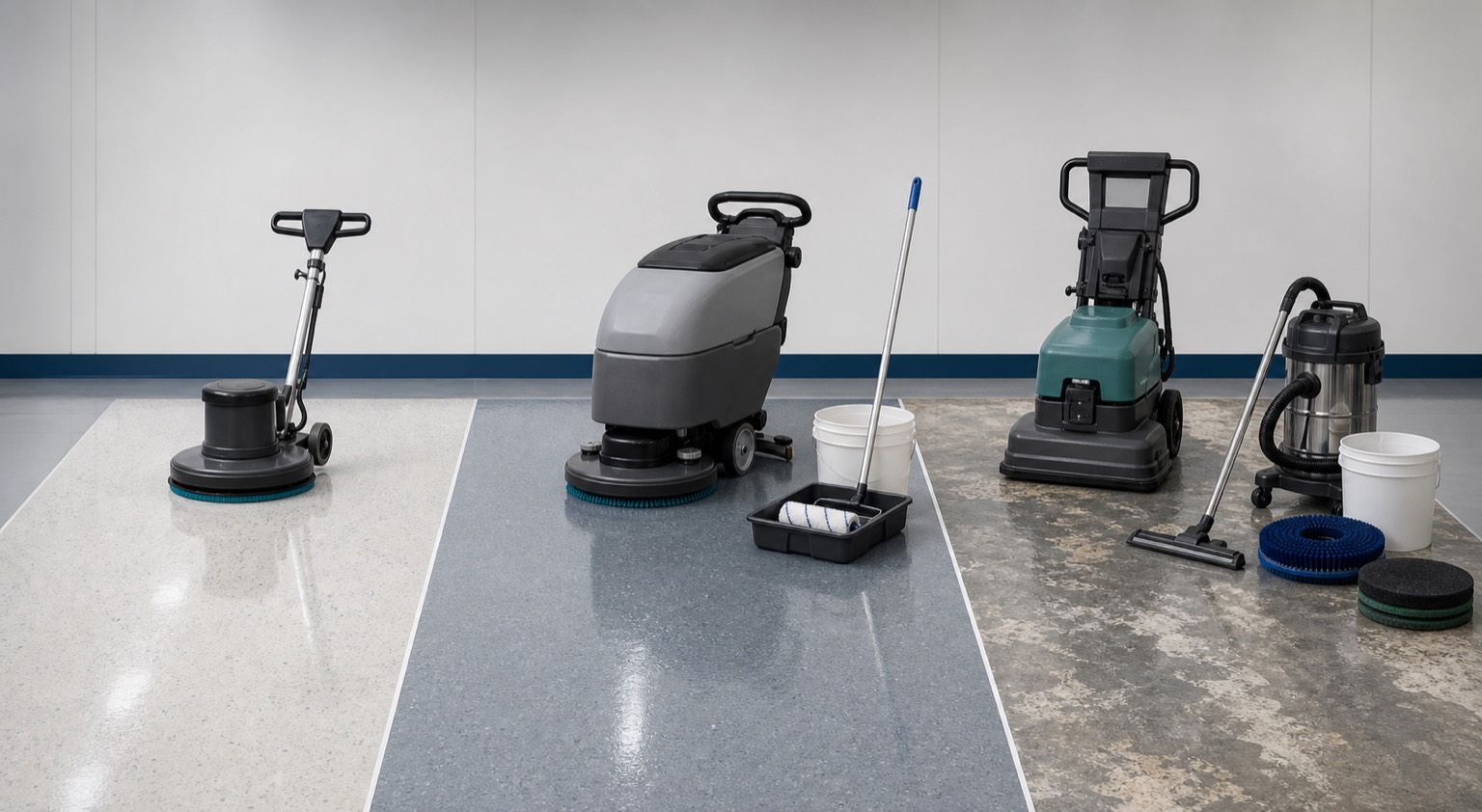
How do traffic tiers change the decision cadence?
High-traffic entries, checkout lanes, cafeterias, corridors, and service counters need frequent grit control, burnish review every few weeks, and recoat review roughly quarterly. Average traffic may burnish every 1–3 months and recoat around 6 months. Low traffic can remain condition-based. Full stripping often centers around annual only when active maintenance supports it.
A floor neglected for 6–12 months without recoating can cross from a manageable top-layer problem into a full-strip condition, but inspect before assuming. Cleaner chemistry, matting, product, solids, traffic, carts, and chair abrasion change the rate. The calendar should trigger observation and testing, not automatic invoicing.
How do the July 2026 economics compare?
On 10,000 square feet, a $0.25 recoat is a $2,500 comparison; a $0.75 strip is $7,500. If one timely recoat defers a suitable full strip, the avoided near-term difference is $5,000. That is not guaranteed savings: the floor must have a clean bonded lower system and the recoat must actually extend the cycle.
Add furniture, edges, minimums, after-hours access, taxes, and multiple nights to both scenarios. Ask the provider to price the test result as 2 alternatives: scrub-and-recoat if the lower layers pass, full strip by affected zone if they fail. A branch quote lets the facility approve the decision before after-hours work begins.
What should the written decision record contain?
Record the substrate, zone, area, last strip and recoat, current products, cleaner, traffic tier, photos, test chemistry, pad, result, edge condition, bond, and chosen rung. For a recoat, state 1–2 coats and compatibility. For a strip, state removal endpoint, recovery, rinse and pH control, 3–5 coat system, cure, and handback.
Reinspect the same control points. If the recoat peels, dirt reappears beneath gloss, or the interval shortens, do not preserve the plan through another coat. The evidence has changed. Update the zone to full strip, floor repair, product review, or no-wax maintenance as appropriate.