The opening deadline is a process constraint

How Do You Schedule Floor Care Without Losing a Business Day?

The honest schedule works backward from public traffic through handback, furniture reset, cure, final coat, coat intervals, rinsing, stripping, and building release—with humidity and a fallback included.

Last updated July 2026

Empty lit corridor at night with a barricade protecting a floor-care work zone
$0.50–$1.50 strip and waxNormal-condition national planning band as of July 2026; the provider's measured written quote controls.
$0.20–$0.40 scrub and recoatUse when the upper finish is worn but the clean lower system remains bonded.
Open-by-morning planScheduled backward from handback, cure, coats, humidity, HVAC, reset, and an agreed fallback.

Facility facts before finish

What timelines can a facility manager use?

Between-coat drying is commonly 30–60 minutes under favorable conditions. Light foot traffic may be possible the same evening in practice, but no universal sourced hour applies to every product and building. Burnishing or heavy use is commonly held about 24 hours after fresh finish. Furniture guidance varies; we advise 24–72 hours when weight, feet, humidity, or finish risk warrants it.

Treat every figure as a planning input. The actual product, solids, coat thickness, floor temperature, indoor humidity, HVAC, airflow, contamination, and traffic load control release. The written schedule distinguishes light foot traffic, normal public traffic, heavy carts, furniture, and high-speed burnishing instead of declaring the floor open with one ambiguous time.

Tell us the floor, area, and opening time

Request a Written Quote

Submitting this form allows Corpus Christi Floor Waxing to send your details to an independent local service provider, who can contact you about scheduling and a written quote.

How do you build an overnight plan backward from opening?

Write the hard opening and subtract manager inspection, barrier removal, agreed furniture reset, heavy-use cure, last-coat drying, each 30–60 minute nominal coat interval, floor drying after rinse, rinsing and recovery, stripping or scrubbing, setup, and the risk that the building closes late. The result is the latest safe start—not the time a crew hopes to arrive.

Set a decision point before chemistry begins. If the first zone is not released, HVAC fails, humidity is high, or stripping exposes extra buildup, reduce the scope, move to a lighter rung, add a night, or postpone. A conditional open-by-morning commitment is operationally useful because the failure branch is decided before the doors are locked.
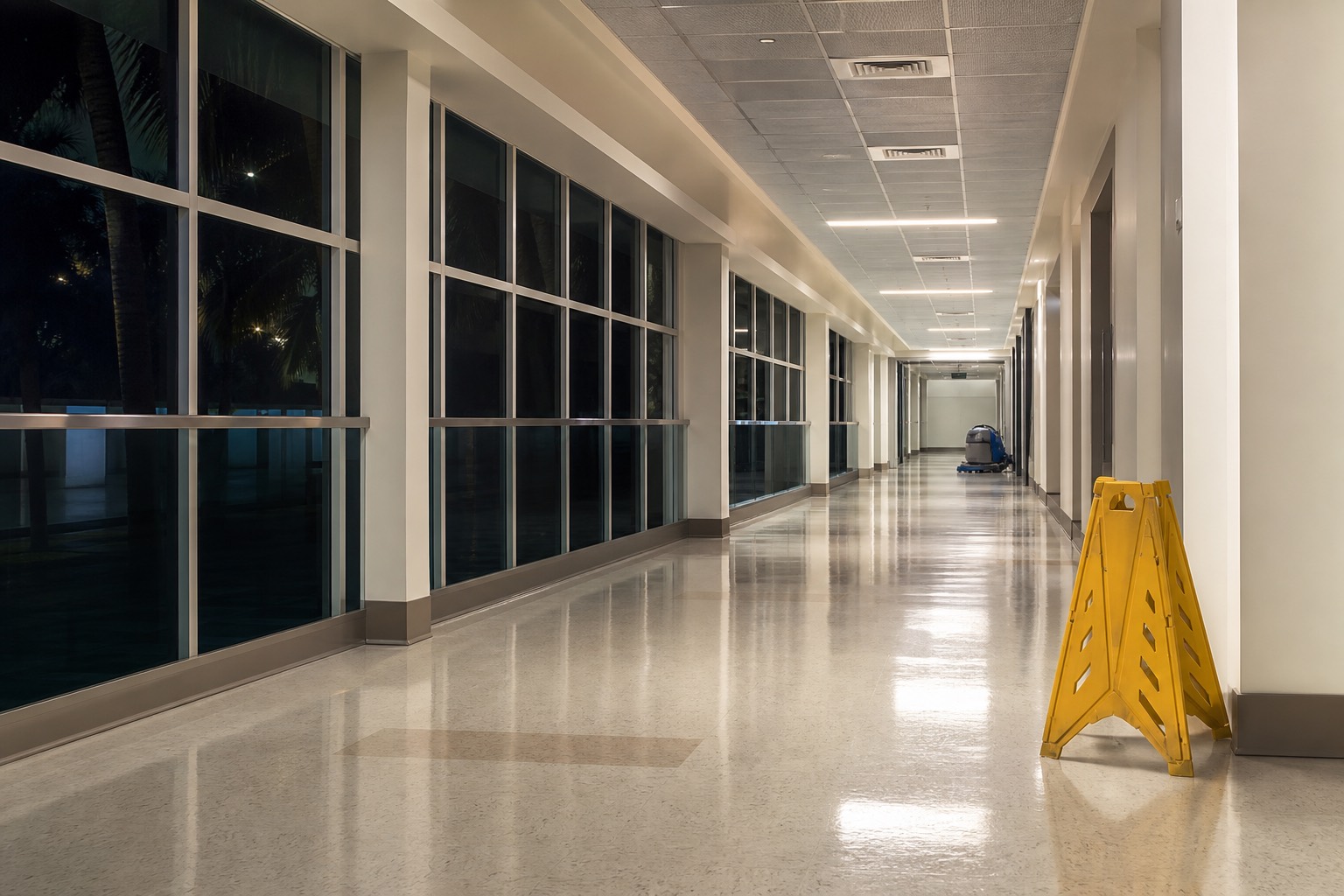
Commercial corridor at night with wet-floor barrier and machine in a distant controlled zone
Illustrative nighttime control. The product and measured conditions determine actual release.

Why does Corpus Christi humidity require HVAC coordination?

Gulf humidity slows water leaving floor finish. Industry troubleshooting guidance reports that a nominal 30-minute dry can stretch beyond 3 hours in high humidity. Corpus Christi commonly averages roughly 73%–79% relative humidity through the year. Keep the building HVAC operating at the agreed setting during application and cure.

Avoid aiming portable fans directly across wet finish because fast surface skinning can contribute to powdering or uneven drying. Use product-compatible general air exchange and verify dry conditions before recoating. Record indoor conditions and coat times when reopening is critical; the outside weather app alone does not describe the corridor.

When is a weekend better than an overnight?

Use a weekend for large strip-outs, many small rooms, heavy furniture, 5-coat systems, healthcare or school route constraints, unknown buildup, mixed substrates, or a facility that cannot keep HVAC and access stable for one short night. The added calendar time can reduce mobilizations, rushed coats, and next-morning risk.

Compare total cost. One weekend may carry premium labor yet still cost less than 4 separate night setups, security openings, furniture resets, and handbacks. Ask for both scenarios with the same measured scope. The cheaper schedule is the one that completes the system and protects operations, not merely the one with the lowest hourly rate.

How should signage, barricades, and slip liability be handled?

Physically block wet zones; do not rely on one folding sign beside an open doorway. Preserve accessible, emergency, staff, delivery, and restroom routes. Place barriers before wet work, inspect them through the shift, and name who can remove them. Record final-coat time, product release guidance, condition check, and handback.

Do not claim that a floor is slip-proof. Do not claim UL 410 classification until the actual finish and listing are verified. After release, water, entry moisture, cleaner residue, dust, footwear, slope, application, and maintenance continue to matter. The facility's incident and safety procedures remain in force after the floor looks finished.

How does hurricane season affect dates and post-flood work?

NOAA defines Atlantic hurricane season as June 1–November 30. Build backup dates for major summer projects, especially school work that has one reopening. When the facility moves into storm preparation, floor appearance work yields to operational readiness. Store products and equipment according to manufacturer and facility requirements.

After flooding or wind-driven water, pause routine recoating. Assess moisture, contamination, loose tile, adhesive, baseboards, and substrate. Obtain qualified flooring, moisture, environmental, or restoration guidance where needed. New finish can hide staining and slow the discovery of damage; visible surface dryness is not proof that the assembly is ready.

What should the handback record say?

Identify completed and deferred zones, final coat and dry-check times, current conditions, allowed light traffic, normal traffic, heavy carts, furniture, and burnishing; list barriers that remain; note cleaner and pad restrictions; record exceptions; and name the provider and facility contacts who accepted the handback.

Photographs should show edges, entries, transitions, and any excluded item without presenting the images as marketing proof. If opening staff find tackiness, whitening, odor, barrier movement, or unplanned traffic, they need a stop-and-call instruction. The schedule is complete only when the next people know what they may do.

Questions people actually ask

What else should you know before scheduling?

Can light foot traffic resume the same night?

It may under favorable practice, but there is no universal hour promise. Product, coat thickness, floor temperature, humidity, HVAC, and actual dryness control release. Write separate times for light foot traffic, normal public traffic, heavy carts, furniture, and burnishing. The provider should confirm the final time after the last coat and condition check.

Why can a 30-minute coat take 3 hours to dry?

High humidity slows water leaving the film. Corpus Christi's Gulf climate makes HVAC and indoor relative humidity important. Thick coats, low temperature, weak air exchange, and residue can add delay. Keep HVAC running, apply thin product-rate coats, avoid direct fans across wet finish, and verify dry conditions rather than multiplying coat count by a brochure minimum.

How long should furniture stay off fresh finish?

There is no single sourced rule for every commercial finish and furniture load. We commonly advise 24–72 hours based on product, conditions, weight, feet, and risk. Heavy cabinets, sharp legs, rolling loads, and pivoting chairs may need longer or protective glides after cure. Put each furniture category and reset responsibility in the written handback.

What if someone walks through a barricade onto wet finish?

Stop traffic, preserve safety, document the route and time, notify the provider and facility contact, and keep the zone closed. The floor crew can assess whether marks can be blended, whether a coat must be removed, and how cure changes. Do not add another layer immediately. Review why the physical barrier and alternate route failed before reopening.

Should hurricane flooding be followed by a recoat?

Not automatically. Flooding can affect moisture, contamination, tile, adhesive, walls, and substrate beneath a dry-looking surface. Pause routine coating and document the affected zones. Obtain qualified flooring, moisture, environmental, or restoration assessment as appropriate. Recoat only after the assembly and cleaning method are confirmed suitable; finish should not hide unresolved water damage.

Measured scope before the floor closes

Ready to turn the appearance standard into a floor plan?

Call Corpus Christi Floor Waxing or send the form. We will schedule the next conversation, and the service provider will confirm the floor type, measured scope, reopening plan, and written price before you approve work.

(361) 310-1620